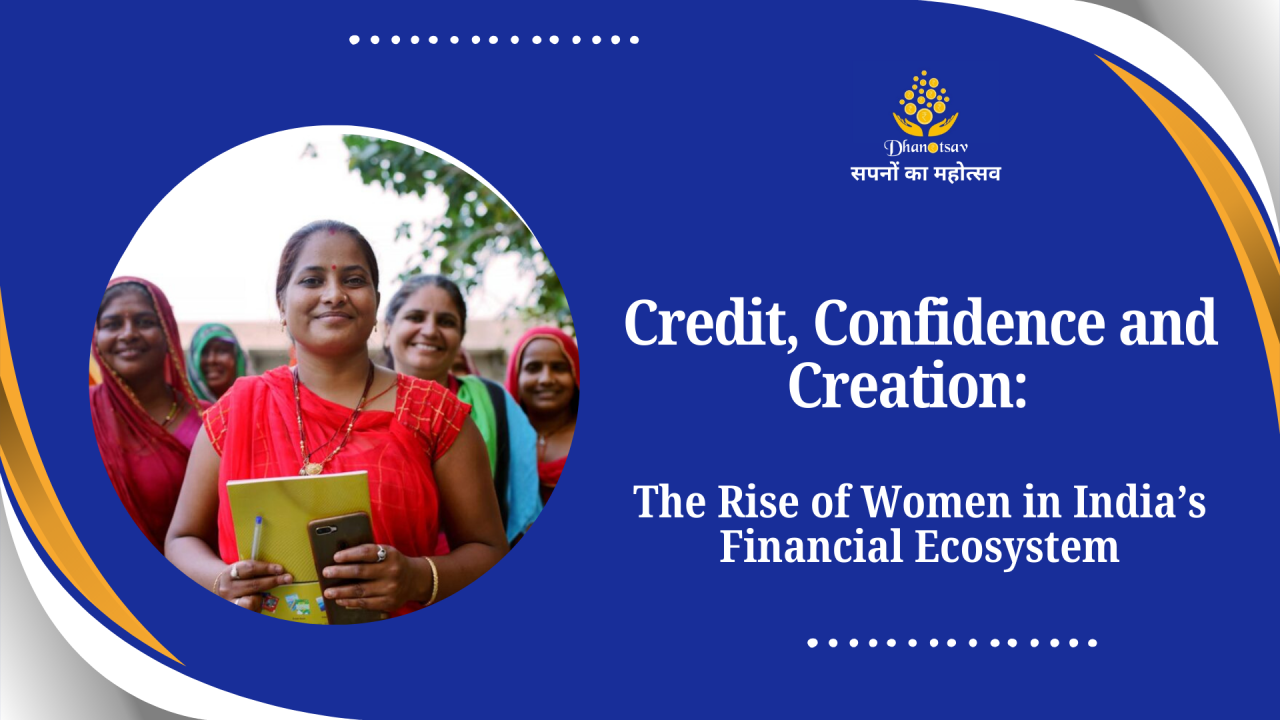
As millions of women actively monitor credit and borrow for enterprise, India’s financial ecosystem is changing. This article decodes NITI Aayog data and explores what it means for women-led entrepreneurship and growth.
A Shift Measured in Millions
The narrative around women and finance in India is transforming — data shows that 27 million women are now actively monitoring their credit scores, a 42% year-on-year increase, and that women borrowers have grown at a 22% CAGR over five years.
This isn’t peripheral growth; it signals a fundamental shift in how women engage with financial systems.
Credit Behaviour: Beyond Borrowing to Decision-Making
Historically, women’s engagement with formal credit was constrained by social norms, limited collateral, and risk aversion. But the trending data indicates women are no longer passive credit takers.
More women from non-metro areas (48% growth) are monitoring credit than those from metros (30% growth), suggesting a geographical democratization of financial awareness.
Credit Products and Their Uses
The report shows women are increasingly borrowing for a mix of personal and economic use:
42% of loans availed by women were for personal finance in 2024.
Loans for business purposes have grown 4.6 times since 2019, though they remain a small share of the total.
Women’s share in business loan origination has risen to 35% of business borrowers.
These patterns show women are not just consuming credit — they are strategically using it for economic mobility.
Policy Momentum: The Women Entrepreneurship Platform (WEP)
Government initiatives, particularly the Women Entrepreneurship Platform (WEP) under NITI Aayog, are designed to address persistent structural challenges and promote gender-inclusive finance. The report’s release underscored that “access to finance is a fundamental enabler for women’s entrepreneurship.”
The WEP’s Financing Women Collaborative (FWC) is a call to financial institutions to co-create gender-smart products tailored to women’s realities — from repayment terms to collateral requirements.
From Numbers to Narratives: What This Means for India
The implications extend beyond financial statistics:
Women’s financial agency correlates with higher household investment in education and health.
As women begin to borrow more for business, they contribute directly to employment and GDP growth.
Their increasing visibility in credit systems signals broader cultural shifts breaking gender norms.
Supporting these shifts requires systems that go beyond finance and include mentorship, market linkages, and visibility — not just capital.
Bringing People to Platforms: The Role of Ecosystems
While credit readiness is improving, many women entrepreneurs still struggle to present viable business propositions or connect with networks that understand their context.
Platforms like Dhanotsav fill this gap by combining talent discovery, skill preparation, and market exposure through a national reality-format pitch series, giving women a stage to tell their story, secure funding, and connect to partners.
By aligning with this evolving ecosystem, brands, media, and financial institutions can participate in a narrative that goes beyond CSR — one that shapes the future of India’s economic landscape.